This may sound like an unfair, snobbish criticism of less-experienced wine drinkers, but frequently the casual drinker, when asking for a recommendation, will emphasize, "I like dry wines." Okay. So you like regular table wine. "No, I want it dry." Houston, we have a semantics problem.
Most people, when they say they like dry wines, are not trying to distinguish between table wines (which are usually dry) and dessert wines (which are usually sweet). They also usually are not talking about Riesling or Muscadet or other off-dry wines, since they are white wines, and most people today (for no good reason) like to say they only drink red wine. No matter. The answer is pretty simple.
Table wine -- what you have in your hand as you read this blog, one hopes -- is dry. That is to say, the fermentation process of turning sugar into alcohol completed leaving no residual sugar. This ought to prevent the wine from tasting cloying or sweet, as well as (for red wines) allow the tannins to flex their muscle. And it is the tannins in red wine that most people think of when they say, "I like dry wines." Tannins are found in oak and the seeds, skins, and stems of grapes. They leave your mouth feeling dried out or, if the wine is exceptionally tannic, make your mouth pucker.
There are folks who have said they enjoy dry wines who don't like a particular Pinot Noir they taste. They call it "sweet." No! It is fermented dry! The lab results show there is no residual sugar! But this is not what they mean. Often, experience demonstrates, those who claim an affinity for dry wines like big, robust red wines such as Cabernet Sauvignon, Malbec, and Zinfandel -- even the dreaded Merlot (with certain exceptions). These are all wines generally higher in tannins than, for example, Pinot Noir or Gamay -- or, of course, white wines.
This is not to say that a bone dry wine, with no residual sugar, can't taste sweet. It happens all the time, particularly given the modern viticultural trend that strives for higher degrees of ripeness in grapes. How do you measure a grape's ripeness? By Brix, that is, the amount of sugar in it.
To create wine, as you know, a winemaker needs to convert that sugar into alcohol by relying on yeast during the fermentation process. Picking grapes that contain more sugar means that, potentially, there will be more alcohol in the finished wine. But the winemaker may not want to do that. In today's world, the winemaker has options: (1) let the wine complete fermentation and slap the 18% alcohol on the label; (2) recognize the issue before the grapes begin fermenting and water it back (that is, add water to reduce the level of potential alcohol); (3) let the wine complete fermentation and send it to a lab to remove alcohol in a spinning cone (yes, this happens); or (4) leave some of that residual sugar in the finished wine, not allowing the wine to ferment until it is completely dry.
In any of the above scenarios, with riper grapes being used to make the wine, the fruit profile tends to taste a bit sweeter than in wines picked at lower sugar levels. This isn't a bad thing. It's a value judgment about what sort of flavors you like in wine. And even riper grapes don't taste that sweet when they are well-balanced with acidity and tannins.
In short, don't worry about all this technical stuff. As a wine drinker -- and being a wine drinker is the most important thing -- all you have to concern yourself with is whether you like the wine. If you do? Drink it. If you decide you really like it? Drink some more. If you don't like it? Drink something else.
Friday, February 5, 2010


Saturday, December 19, 2009
Wine of the moment: Siduri Pinot Noir Sonoma County 2008
The 2008 vintage posed a number of major challenges to winemakers in Sonoma County in 2008. First came unexpected and highly varied late-season frosts that crippled a number of Russian River Valley vineyards. Second, wildfires in Mendocino County crept into the Sonoma Coast, ravaging some vineyards with smoke taint. Frost will decimate a vineyard's crop yields that year, also dulling the fruit as if it has been run through the most character-stripping filtration. It can take the vines two years or more to recover fully. Smoke taint gives the grapes a true smoked quality, rendering it essentially undrinkable (or perhaps evoking enormous amounts of new oak).
In 2008, however, Adam Lee at Siduri Wines (and their non-Pinot Noir branch, Novy Family Wines) avoided these two potentially disastrous tricks from Mother Nature. The 2008 Sonoma County blend is a testament to the constant drive Adam, his wife Dianna, and the Siduri crew have for making better wine every year. The 2008 edition may well surpass the terrific 2005 and 2007, which were the product of much kinder growing seasons. Expect plenty of black cherry fruit, spice, and a bit more earthiness out of the 2008 Sonoma County. The kicker: It goes for only $19.50 on the mailing list, plus tax and shipping. There is pretty good distribution of Siduri wines in Houston, although this wine isn't on the shelf at Spec's. It's versatile, with good acidity that makes it excellent for pairing with a variety of foods, from pizza to roast chicken to pan-seared steak.
Full disclosure: Adam and the gang at Siduri are good friends. Adam and Dianna are also native Texans, creating inherent bias, right? But their wines are without question some of the best and most consistently good in California and Oregon. All my tasting notes, on Siduri and other wineries, are available here.
In 2008, however, Adam Lee at Siduri Wines (and their non-Pinot Noir branch, Novy Family Wines) avoided these two potentially disastrous tricks from Mother Nature. The 2008 Sonoma County blend is a testament to the constant drive Adam, his wife Dianna, and the Siduri crew have for making better wine every year. The 2008 edition may well surpass the terrific 2005 and 2007, which were the product of much kinder growing seasons. Expect plenty of black cherry fruit, spice, and a bit more earthiness out of the 2008 Sonoma County. The kicker: It goes for only $19.50 on the mailing list, plus tax and shipping. There is pretty good distribution of Siduri wines in Houston, although this wine isn't on the shelf at Spec's. It's versatile, with good acidity that makes it excellent for pairing with a variety of foods, from pizza to roast chicken to pan-seared steak.
Full disclosure: Adam and the gang at Siduri are good friends. Adam and Dianna are also native Texans, creating inherent bias, right? But their wines are without question some of the best and most consistently good in California and Oregon. All my tasting notes, on Siduri and other wineries, are available here.
Thursday, December 17, 2009
Simplicity: Salad Dressing
Maybe the weather has turned too cold to think about crisp salads, but there are a lot of greens at the local farmers markets and, with rich holiday food lurking around every corner, plenty of incentive to eat light meals these days. Pair a salad with a warm bowl of tomato soup or some pot roast (or Houston's perennial favorite, short ribs), and you're able to lighten up a hearty, warming meal. And while you're at it, why pay $4 or more for a bottle of salad dressing? Make your own. There are limitless possibilities from any recipe, and you can control the fat content, which is another way to cut calorie corners in the Fat Fortnight around Christmas and New Year's. Here's one basic recipe:
2 tablespoons Dijon mustard
4 tablespoons red wine vinegar (or balsamic or white wine or champagne ... you get the idea)
2-4 cloves of garlic, depending on your love of antioxidants and/or garlic
Salt and pepper to taste
6-8 tablespoons of extra virgin olive oil, depending on your preference for piquancy
Whisk all the ingredients together, and there you have it. Versatile and quite robust, this dressing can double as a sauce for pork or chicken. The mustard and black pepper also pair well with tannins in bigger red wines, so this can make a nice accompaniment to big meat dishes. You can also substitute lemon juice for vinegar or any other acid that is your preference. The mustard and relatively low oil content makes the emulsification on this dressing easy, and it holds for days.
2 tablespoons Dijon mustard
4 tablespoons red wine vinegar (or balsamic or white wine or champagne ... you get the idea)
2-4 cloves of garlic, depending on your love of antioxidants and/or garlic
Salt and pepper to taste
6-8 tablespoons of extra virgin olive oil, depending on your preference for piquancy
Whisk all the ingredients together, and there you have it. Versatile and quite robust, this dressing can double as a sauce for pork or chicken. The mustard and black pepper also pair well with tannins in bigger red wines, so this can make a nice accompaniment to big meat dishes. You can also substitute lemon juice for vinegar or any other acid that is your preference. The mustard and relatively low oil content makes the emulsification on this dressing easy, and it holds for days.
Wednesday, December 9, 2009
In re Guy's Meat Market
Before the Burger Court of Houston, Texas
Docket No. 4
In re GUY'S MEAT MARKET
Per Curiam. In the times when the daily special was indeed special, there was a narrow window of opportunity for those who sought to partake. That is, diners and greasy spoons often rustled up a batch of something in the morning and when they ran out, they ran out. If you snoozed, then you lost. Cast in this mold is Guy’s Meat Market, located on Old Spanish Trail. Despite meeting the constitutional requirements of standing to submit a petition for review, prudential concerns predominate, and this Court declines to exercise its jurisdiction and assign a rating to Guy’s Meat Market.
Guy’s is a meat market. The number of bona fide meat markets in Houston pales in comparison to the number of “meat markets” like the Drake, Pub Fiction, and similar ilk on Washington Avenue. Aside from being a meat market, Guy’s also serves up burgers, barbecue, and certain sides. In the discussion of Houston’s best, Guy’s burgers are frequently referenced.


While no hard evidence exists, it is rumored that Guy’s makes about two hundred burgers a day and sells out well before 1:00 p.m. The question, then, is why don’t they just grill up some more burgers? The answer is simple: they don’t grill the burgers. Guy’s burgers are smoked. And as any low and slow saveur understands, smoking takes time. Therefore, it is not feasible for them to just whip up burgers. Presumably the burgers are formed the night before and smoked overnight.
Smoking renders Guy’s Burgers different. Not different-bad, but different-different. The burgers are significantly drier than even those of Mel’s Country Café See Dkt. No. 1. However, Guy’s burgers are also significantly more flavorful. It is obvious that the burgers are smoked alongside the sausage, brisket, and ribs also on the menu. Traditional notions of fair char and substantial juiciness are not implicated in reviewing Guy’s burgers. Even though they are beef, Guy’s burgers are a different animal. Typical criteria used by the Court do not comport with a review of Guy’s burgers.
The Court is, therefore, left with the task of evaluating the merits of a petition without meaningful standards or relevant precedent. For example, while flavorful, Guy’s burgers lacked the texture sought after by this Court. Is it proper, though, to compare the texture of Guy’s smoked burgers with that of Lankford’s griddled-cooked samples? Further, is it proper for this Court to announce standards for review without legislative guidance? These prudential concerns, if overlooked or ignored, would unduly prejudice Guy’s.
In sum, whether Guy’s burgers pass muster is a question better suited for resolution by the other branches of gustatory governance, such as the Smokehouse of Representatives.

Friday, November 20, 2009
Red wine with fish?
"Red wine with fish. I should have known." So said James Bond to the villain Red Grant in From Russia With Love. Not to contradict the man of all men in the Bond movie of all Bond movies, but perhaps he wasn't aware of salmon with Pinot Noir? Or, more properly in the case of Bond, salmon with red Burgundy? More recently, Wine Spectator executive editor Thomas Matthews essentially gave an updated iteration of Bond's position: "I was pleasantly surprised by the way the Rioja paired with sea scallops served with chorizo and polenta," he said of a red wine a restaurant paired with his fish course. Is that such a stretch? The spice of the chorizo, richness of the polenta. A red wine doesn't seem like a stretch or a surprise.
What the sentiment of Matthews suggests is that the old stereotypes about wine and food remain strong. Of course, certain traditional pairings of wine and food attain that status because they work so well. Have an excellent, well-aged Bordeaux with a roasted rack of lamb, and you'll be transported to an ethereal plane. Find a slightly funky, simple, cheap red Burgundy to pair with sottocenere, the delightful cow's milk cheese with black truffles, and you'll gain full understanding of what people mean when they talk about the mushroom characteristics of Pinot Noir.
Traditional pairings aren't bad. Nor are they, however, sacred cows. The wine world has been expanding exponentially over the past few decades. Experimentation has increased on numerous fronts. Winemakers have achieved greater understanding. Quality has increased. Value remains in many respects, as up-and-coming regions reach new levels. In the realm of wine and food, this spirit of experimentation that winemakers have embraced with such gusto needs to make greater inroads when it comes to food pairings. Old ways need to be rethought. Take, for example, the notion that wine goes with cheese. In some cases (see the sottocenere example above), this works out beautifully. Port or Sauternes and Stilton. Parmesan and an earthy Italian red. But for the most part, cheese and wine pair terribly if you eat them together, to try to mingle their flavors. Cheese sticks to your mouth and dominates most of the time. Eaten separately, they can be delightful, but not in the usual "pairing" sense.
A smart winemaker from Sonoma County, John Holdredge, imparts great wisdom in this arena. It applies to wine snobbery in general and the thicket of food and wine pairings in particular. Wine is like food, John says. No one has ever taught you to eat. You either like it, or you don't. If you like it, eat it. If you really like it, eat some more. If you don't like it, eat something else. Wine is just food: if you like it, drink it. If you really like it, drink some more. If you don't like it, drink something else. The same attitude should apply to wine pairings: eat what you like, drink what you like.
The simple truth is that most people don't actually drink wine with their food. They tend to eat with the occasional sip or, at least, don't drink the wine in a way to try to meld its flavors with those of the food. That only provides more reason to maximize your personal pleasure in choosing your food and wine. If you want something non-traditional, go for it. You shouldn't worry about the wine geeks, but if you do, score points for going for contrasting pairings. Have Pinot Noir with grilled steak because you want the acidity to cut the richness of the fat. Drink Syrah with halibut because it's cold outside, and you want to. It doesn't matter. Fight the rules. People tend to still be too uptight about wine. It's just another citizen of the dinner table, like the salt or pepper shaker. Don't let it rule you.
So in the spirit of doing what you feel, here are a few adventurous examples:
1. Roasted chicken with California Syrah
Syrah tends to be a bit fat, and the California incarnations often are big, brawny, and full of forward fruit. Chicken normally would thought to be too delicate, but it also takes on an earthy, herbal quality with common preparations, such as with herbs de provence. This can be really nice during cooler weather.
2. Popcorn with aged Cabernet Sauvignon
Popcorn has become pretty chic in pairing with things like Champagne and Chardonnay. But try it with a Cabernet that has some age on it. It's a tasty way to focus on the wine without tiring out your palate.
3. Filet Mignon with Rose Champagne
A simple filet mignon, pan-seared or broiled, has a delicate flavor but also the unavoidable richness of beef. The sturdier fruit of rose Champagne is enough to stand up to this more delicate steak, and the wine's crisp acidity will help cut the richness.
4. Indian food with Pinot Noir
Often you hear of pairing wines that work well with spicy food with Indian cuisine -- Gewurtraminer, Riesling, Champagne, Zinfandel, Malbec, and the like. But Pinot Noir works exceptionally well with many dishes, particularly if the wine emphasizes the Asian spice quality you can often find in Pinot. Russian River Valley does this quite well, pairing nicely with ginger, mace, saffron, anise, and other commonly found spices. You'll want to avoid very spicy (in terms of heat) dishes, though.
What the sentiment of Matthews suggests is that the old stereotypes about wine and food remain strong. Of course, certain traditional pairings of wine and food attain that status because they work so well. Have an excellent, well-aged Bordeaux with a roasted rack of lamb, and you'll be transported to an ethereal plane. Find a slightly funky, simple, cheap red Burgundy to pair with sottocenere, the delightful cow's milk cheese with black truffles, and you'll gain full understanding of what people mean when they talk about the mushroom characteristics of Pinot Noir.
Traditional pairings aren't bad. Nor are they, however, sacred cows. The wine world has been expanding exponentially over the past few decades. Experimentation has increased on numerous fronts. Winemakers have achieved greater understanding. Quality has increased. Value remains in many respects, as up-and-coming regions reach new levels. In the realm of wine and food, this spirit of experimentation that winemakers have embraced with such gusto needs to make greater inroads when it comes to food pairings. Old ways need to be rethought. Take, for example, the notion that wine goes with cheese. In some cases (see the sottocenere example above), this works out beautifully. Port or Sauternes and Stilton. Parmesan and an earthy Italian red. But for the most part, cheese and wine pair terribly if you eat them together, to try to mingle their flavors. Cheese sticks to your mouth and dominates most of the time. Eaten separately, they can be delightful, but not in the usual "pairing" sense.
A smart winemaker from Sonoma County, John Holdredge, imparts great wisdom in this arena. It applies to wine snobbery in general and the thicket of food and wine pairings in particular. Wine is like food, John says. No one has ever taught you to eat. You either like it, or you don't. If you like it, eat it. If you really like it, eat some more. If you don't like it, eat something else. Wine is just food: if you like it, drink it. If you really like it, drink some more. If you don't like it, drink something else. The same attitude should apply to wine pairings: eat what you like, drink what you like.
 |
The simple truth is that most people don't actually drink wine with their food. They tend to eat with the occasional sip or, at least, don't drink the wine in a way to try to meld its flavors with those of the food. That only provides more reason to maximize your personal pleasure in choosing your food and wine. If you want something non-traditional, go for it. You shouldn't worry about the wine geeks, but if you do, score points for going for contrasting pairings. Have Pinot Noir with grilled steak because you want the acidity to cut the richness of the fat. Drink Syrah with halibut because it's cold outside, and you want to. It doesn't matter. Fight the rules. People tend to still be too uptight about wine. It's just another citizen of the dinner table, like the salt or pepper shaker. Don't let it rule you.
So in the spirit of doing what you feel, here are a few adventurous examples:
1. Roasted chicken with California Syrah
Syrah tends to be a bit fat, and the California incarnations often are big, brawny, and full of forward fruit. Chicken normally would thought to be too delicate, but it also takes on an earthy, herbal quality with common preparations, such as with herbs de provence. This can be really nice during cooler weather.
2. Popcorn with aged Cabernet Sauvignon
Popcorn has become pretty chic in pairing with things like Champagne and Chardonnay. But try it with a Cabernet that has some age on it. It's a tasty way to focus on the wine without tiring out your palate.
3. Filet Mignon with Rose Champagne
A simple filet mignon, pan-seared or broiled, has a delicate flavor but also the unavoidable richness of beef. The sturdier fruit of rose Champagne is enough to stand up to this more delicate steak, and the wine's crisp acidity will help cut the richness.
4. Indian food with Pinot Noir
Often you hear of pairing wines that work well with spicy food with Indian cuisine -- Gewurtraminer, Riesling, Champagne, Zinfandel, Malbec, and the like. But Pinot Noir works exceptionally well with many dishes, particularly if the wine emphasizes the Asian spice quality you can often find in Pinot. Russian River Valley does this quite well, pairing nicely with ginger, mace, saffron, anise, and other commonly found spices. You'll want to avoid very spicy (in terms of heat) dishes, though.
Tuesday, November 3, 2009
Amuse Bouche: The comforts of fall
The current string of weather in Houston conjures up the feel of California wine country in a cool vintage. Highs in the mid-70s. Lows down around 50. If grapes could carry out a full growing cycle in two weeks, there would be real hope for the wine industry in Texas. In the photo below, three of the great pleasures at this time of year:

First, coq au vin, always a warming and delicious fall dish. Second, wine, during the peak of harvest. This particular one? Holdredge Pinot Noir Russian River Valley Wren Hop Vineyard 2006, made by one of the most delightful and personable fellows in Sonoma County. Third, in the background, playoff baseball. Even if the Mets aren't playing, it's a terrific time of year. Life is good.
First, coq au vin, always a warming and delicious fall dish. Second, wine, during the peak of harvest. This particular one? Holdredge Pinot Noir Russian River Valley Wren Hop Vineyard 2006, made by one of the most delightful and personable fellows in Sonoma County. Third, in the background, playoff baseball. Even if the Mets aren't playing, it's a terrific time of year. Life is good.
Sunday, November 1, 2009
Simplicity: Cream cheese tart
Cheesecake is a comforting, if heavy, sort of dessert. But it's more versatile than that. With a little creative thinking, it can have sweet or savory possibilities with the addition of Grand Marnier and chocolate or chives and herbs de Provence. The difficult is that cheesecake also is very involved. It requires a special pan. And lots of cream cheese, butter, and eggs. It's a profound undertaking, which is no small thing. You might be tempted to actually eat the whole thing, facing potentially unlimited calorie intake until the entire delicious thing has gone the way of the dinosaurs.
But you don't have to resort to a full cheesecake in order to get that cheesecake flavor and feel. This is essentially a cream cheese pie. It's lighter and simpler than full-fledged cheesecake but every bit as versatile.

Cream Cheese Tart
1 8-ounce package cream cheese or Neufchatel
1 stick butter
1/2 cup sugar
1 egg
Vanilla and almond extract to taste
Zest of one lemon (optional)
1 pie or tart crust, using your favorite recipe (but even a store-bought one works fine)
This is about as easy as you get. Beat together the cream cheese, butter, and sugar until combined well, about one or two minutes in a stand mixture. Add the egg, vanilla, and almond and mix together. You won't want to beat this mixture more than 30-45 seconds. Add to your crust and bake 20-25 minutes at 350 degrees. It'll puff slightly and get a few brown spots. This is a fluffy, delightful, and much easier substitute for cheesecake. And it makes a great, guilty-pleasure breakfast the next day.
But you don't have to resort to a full cheesecake in order to get that cheesecake flavor and feel. This is essentially a cream cheese pie. It's lighter and simpler than full-fledged cheesecake but every bit as versatile.
Cream Cheese Tart
1 8-ounce package cream cheese or Neufchatel
1 stick butter
1/2 cup sugar
1 egg
Vanilla and almond extract to taste
Zest of one lemon (optional)
1 pie or tart crust, using your favorite recipe (but even a store-bought one works fine)
This is about as easy as you get. Beat together the cream cheese, butter, and sugar until combined well, about one or two minutes in a stand mixture. Add the egg, vanilla, and almond and mix together. You won't want to beat this mixture more than 30-45 seconds. Add to your crust and bake 20-25 minutes at 350 degrees. It'll puff slightly and get a few brown spots. This is a fluffy, delightful, and much easier substitute for cheesecake. And it makes a great, guilty-pleasure breakfast the next day.
Wednesday, October 14, 2009
Amuse Bouche: The almost-chill of Houston fall
Autumn in Houston isn't so much autumn or a cooling off as it is a lifting of humidity. But it's good enough to reintroduce terms like "roast" and "braise" into the culinary vocabulary again. You also get those excellent fall ingredients, like butternut squash, fresh (not stored) apples, kale, figs, and pears. Seeing all the legitimately autumn weather on TV makes you want that cold-weather comfort food that seems to stay on Houston restaurant menus year-round but always feels out of place during the six months of oppressive summer. Houston's second spring is most welcome. This is a good week to hit the farmer's market of your choice, pick up some seasonal ingredients, and get down with the soothing flavors of fall ... while still eating on the patio.
Wednesday, September 30, 2009
In re Sparkle's Hamburger Spot
Before the Burger Court of Houston, Texas
Docket No. 3
In re SPARKLE’S HAMBURGER SPOT
Opinion for the court filed by LAHAD, J, in which JJ. GUTTING and BRINKMANN join.
LAHAD, J. Before the Court is the submission of Sparkle’s Hamburger Spot (“Sparkle”). We hold that Sparkle, despite its nearly unconscionable sides, serves a flavorful and well-made hamburger thus warranting an A- rating.
Background
Sparkle petitioned this Court in forma pauperis but declined to have counsel appointed. After the required Faretta colloquy, this Court granted Sparkle’s request to proceed pro se. Located on the corner of Dowling and Jefferson streets in Houston’s Third Ward, Sparkle consists of a small blue building that serves as the kitchen and front desk. Seating is limited to a pair of picnic tables that have seen better days. Based on discovery obtained, no one actually eats at Sparkle’s location. Rather, food ordered and taken to another location for consumption. The picnic tables provided at Sparkle, then, are primarily used to wait for one’s order.

The extensive menu at Sparkle includes single and double versions of hamburgers and cheeseburgers, the expected sides, as well as some interesting fare like “pork chop sandwich.” Indeed, several amici have pointed to such unique menu elements, real ice cream shakes and local flair as factors. Pork chops and ice cream aside, this Court limits its holdings and reasoning to genuine burger cases and controversies. Petitioners and amici would do well not to view dicta within our case law as advisory opinions about sides, shakes, or scenery. However, it is emphatically the province and duty of this Court to say what the burger law is.

The Court reviewed three Sparkle offerings: 1) a double hamburger; 2) a cheeseburger; and 3) a double cheeseburger. The aforementioned lack of seating and the steamy weather forced the Court’s conference to Justice Brinkmann’s chambers.
While waiting for the burgers, this Justice observed a gentlemen in the kitchen grab hunks of ground beef and roll them into baseball-sized globs of meat. The resulting burgers indicated that these meat baseballs were the patties’ progenitors. Simply, the patties at Sparkle are, to use the parlance of our times, large and in-charge. Transporting the meals back to chambers constituted a workout sufficient to offset a few of the burgers’ calories. The fear, however, is that such large mounds of ground beef will have charred skin yet raw centers. At Sparkle the adept grill-mistress knew exactly how to handle the patties. Despite easily crossing the half-pound threshold, the patties on each burger were well-cooked to medium.

Similarly, often the larger a food item, the less flavor it has. Grapes are a prime example. Fortunately, the patty at Sparkle does not fall into this category. The patty was not too salty or peppery. Rather, it had a welcome beefy flavor, perhaps enhanced by its sheer mass. It would have been a major disappointment had Sparkle’s beefy patty been bland or tasteless. Special mention should be given to the temperature of the patties. The patties were piping hot even after the additional time from receipt to conference.

Extras
Sparkle offers the basic side items as well as chili-cheese variants of each. The approach to sides at Sparkle is the exact opposite of its approach to burgers. The French fries were an odd consistency conservatively dusted with some kind of seasoning. The curly fries almost eluded review for lack of sufficient fries to review. The $2 order of chili cheese curly fries lacked the chili and cheese and maybe came in at 1 oz. Poor form on two counts.
As this Court has made clear, a party is reviewed on burger alone. Suffice it to say that this standard has benefitted several parties. In sum, this Court finds that Sparkle burger serves a large juicy hamburger, well seasoned and cooked, that warrants an A- rating.
Gutting, J., concurring. I join the Court's opinion but write separately to explicate on Sparkle's side dishes. Deplorable, though inexpensive, they are, it is virtually impossible to judge what, if any, merit they have. The sample size simply is too small. Eating an order of Sparkle's fries is like taking the slightest gasp of air. It is essentially without substance. Or sustenance. It is fortunate for Sparkle's Hamburger Spot they make such outstanding and generous burgers. This Court cannot and should not allow itself to be distracted by lesser subject matter in its pursuit of burger justice, as the final (and correct) judgment of Sparkle Burger has been rendered today. I applaud my learned brethren for this judicious evaluation of an excellent hamburger.
Wednesday, September 16, 2009
Review: Cyrus
Cyrus Restaurant in Healdsburg, California, has played a leading role in making Sonoma County in general and the Russian River Valley in particular the trendy pick in wine country since it opened in 2005. In 2006, it became one of four Bay Area restaurants to garner two Michelin stars in the guide’s first San Francisco rankings. It’s a restaurant with flair — from the Champagne and caviar cart to the formal service — and a compelling narrative. Chef Douglas Keane, a protégé of Gary Danko, was diagnosed with a brain tumor in 2004 during the planning of Cyrus. The tumor turned out to be benign, and Keane has blazed the trail of success since.
Cyrus stands out in Sonoma County’s casual answer to the more showy grandeur of Napa Valley, because it is so formal. At the same time, it is just the sort of standard the area needed to be taken seriously at the highest levels — plus the magnificent wines of Sonoma deserve a restaurant that is a showcase.
In its earlier days, Cyrus suffered from occasional variability. But the past two years, it has been consistently excellent and quite worthy of its two stars. A recent visit confirmed Keane and his staff have settled in nicely, comfortable with the style and striding forward with marvelous creativity.


The meal began with a tower of canapés, each showcasing a different flavor: sour, sweet, salty, bitter, pungent, and that ill-defined but popular umami. It was an almost Alinea-like focus to begin the meal and quite interesting. The main event began with an amuse bouche of gorgeously fresh kona kampachi topped with a extra small fried shrimp that added texture.
Next, a Keane signature: Thai-marinated lobster with avocado, mango, and hearts of palm, topped with a Thai basil sauce that brings the entire refreshing dish together. It is so alive and delightful, complemented beautifully by a dry German Riesling from the Pfalz, Okonomierat Rebhold “vom Rotliegenden” 2005.

The lobster, perhaps the high of the meal, preceded a choice between torchon of foie gras or gnocchi with morels. The torchon, salt-cured and accompanied by tamarind and dates, got a terrific acidic bite from pickled onions and a reliable German wine, Selbach-Oster Riesling Spatlese Zeltinger Scholossberg from the excellent 2007 vintage. The gnocchi also shone, tasty pillows with bite, but the fresh morels stole the show.


Up next was a delightful scallop dish with a Spanish touch. Cooked skillfully and crusted on one side with chorizo, it was complemented beautifully by a mussel broth and fresh cockle. The downside was the wine pairing, a Manzanilla sherry from Hidalgo that did nothing for the food. What is with the trend toward pairing sherry at least once during a tasting menu? This could have been such an opportunity to complement the scallop and chorizo with the spice of Tempranillo or Garnacha. Or just stick with the classic scallop pairing, Albarino. Sherry overpowered the delicacy of the scallop and didn’t mesh with the chorizo.

Keane’s Asian influence came through in the fourth course. Crisp duck breast came atop a scallion rice cake with maitake mushroom and ponzu. The duck was delightful, but the rice cake was tough and chewy, like a Rice Krispie treat that has been left out on the counter overnight. The marvelous sauce and mushrooms cancelled it out, as did a terrific Camus-Bruchon Savigny-les-Beaune 2006.

Up next, a magnificent wagyu beef with burdock and shiso with a remarkable, richly flavored oxtail umeshu consommé. It is possible the wagyu was one of the most tender and delicious pieces of beef in human history, rivaling even the awe-inspiring product of Bryan Flannery. Almost as good, however, was the other fifth-course choice: lamb roulade with celery root, parsnip, and turnip. A slice of black truffle in the roulade cut the lamb flavor slightly, adding an earthy note that played well with the root vegetables.


The cheese plate is notable, although not as profound as Tru in Chicago, but it was complemented by a tremendous 2006 Vouvray from Champalou.. There is a variety of selection, including a sheep’s milk cheese that betrays no sweat-sock notes. To cleanse the richness of the meat dishes and cheese, Keane goes beyond the usual sorbet. Out comes a verjus sorbet, with a crisp, palate-sharpening blood orange and Riesling soup. It’s served with a piece of crystallized picholine olive brittle. This was supremely refreshing, clearing the way for dessert.

Dessert was a bit hit-or-miss. Each choice contained excellent elements, but each also included an unsuccessful flirtation with savory flavors. There was a remarkable, classic tiramisu with a spoonful of cappuccino foam and a surprisingly delicate espresso gelato. The dish suffered from out-of-place caramelized fennel sprinkled on it. Then there was a terrific five spice cake with a passion fruit macaroon, each of which stood out for its flavor and execution. But a Thai basil-coconut milk gelato was bizarre, sticking out as inappropriate on the plate. This was a fine example of the need for serious reflection before pastry chefs make forays into sweet-savory interplay. Such experimentation isn’t required. Sometimes a sweet dessert is enough, and the night’s efforts underscored that fewer elements would have been more. Fortunately, each dessert came with an interesting and tasty wine. The tiramisu showcased the viscous and surprisingly acidic Maury Roussillon Mas Amiel 1990, while the five-spice cake provided a nice foil to the tropical richness of another German 2007, the Weegmuller Scherebe Auslese Haardter Mandelring.

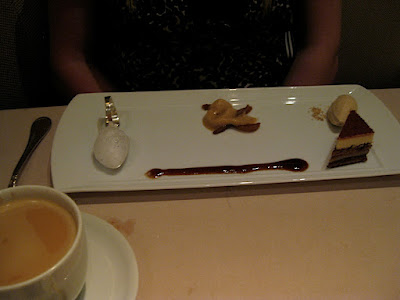
As a whole, however, the tasting menu at Cyrus is well worth the trip. It is thoughtfully constructed and well-executed. The service is smooth, with enough casual touches to remind you you’re in Sonoma. Additionally, it’s worth remembering what a young restaurant this is. Open for a little more than four years, it’s astonishing the level Keane and his staff operate at. This is a worthy dining experience and an attraction worth seeking out. Cyrus hasn’t even reached its adolescence, yet it already hits high notes worthy of some of the most prestigious restaurants in the country. With supreme focus and continued dedication, it’s plausible, if still a long shot, to see how Keane and company might give the French Laundry and its ilk a run for their money.
Cyrus stands out in Sonoma County’s casual answer to the more showy grandeur of Napa Valley, because it is so formal. At the same time, it is just the sort of standard the area needed to be taken seriously at the highest levels — plus the magnificent wines of Sonoma deserve a restaurant that is a showcase.
In its earlier days, Cyrus suffered from occasional variability. But the past two years, it has been consistently excellent and quite worthy of its two stars. A recent visit confirmed Keane and his staff have settled in nicely, comfortable with the style and striding forward with marvelous creativity.
The meal began with a tower of canapés, each showcasing a different flavor: sour, sweet, salty, bitter, pungent, and that ill-defined but popular umami. It was an almost Alinea-like focus to begin the meal and quite interesting. The main event began with an amuse bouche of gorgeously fresh kona kampachi topped with a extra small fried shrimp that added texture.
Next, a Keane signature: Thai-marinated lobster with avocado, mango, and hearts of palm, topped with a Thai basil sauce that brings the entire refreshing dish together. It is so alive and delightful, complemented beautifully by a dry German Riesling from the Pfalz, Okonomierat Rebhold “vom Rotliegenden” 2005.
The lobster, perhaps the high of the meal, preceded a choice between torchon of foie gras or gnocchi with morels. The torchon, salt-cured and accompanied by tamarind and dates, got a terrific acidic bite from pickled onions and a reliable German wine, Selbach-Oster Riesling Spatlese Zeltinger Scholossberg from the excellent 2007 vintage. The gnocchi also shone, tasty pillows with bite, but the fresh morels stole the show.
Up next was a delightful scallop dish with a Spanish touch. Cooked skillfully and crusted on one side with chorizo, it was complemented beautifully by a mussel broth and fresh cockle. The downside was the wine pairing, a Manzanilla sherry from Hidalgo that did nothing for the food. What is with the trend toward pairing sherry at least once during a tasting menu? This could have been such an opportunity to complement the scallop and chorizo with the spice of Tempranillo or Garnacha. Or just stick with the classic scallop pairing, Albarino. Sherry overpowered the delicacy of the scallop and didn’t mesh with the chorizo.
Keane’s Asian influence came through in the fourth course. Crisp duck breast came atop a scallion rice cake with maitake mushroom and ponzu. The duck was delightful, but the rice cake was tough and chewy, like a Rice Krispie treat that has been left out on the counter overnight. The marvelous sauce and mushrooms cancelled it out, as did a terrific Camus-Bruchon Savigny-les-Beaune 2006.
Up next, a magnificent wagyu beef with burdock and shiso with a remarkable, richly flavored oxtail umeshu consommé. It is possible the wagyu was one of the most tender and delicious pieces of beef in human history, rivaling even the awe-inspiring product of Bryan Flannery. Almost as good, however, was the other fifth-course choice: lamb roulade with celery root, parsnip, and turnip. A slice of black truffle in the roulade cut the lamb flavor slightly, adding an earthy note that played well with the root vegetables.
The cheese plate is notable, although not as profound as Tru in Chicago, but it was complemented by a tremendous 2006 Vouvray from Champalou.. There is a variety of selection, including a sheep’s milk cheese that betrays no sweat-sock notes. To cleanse the richness of the meat dishes and cheese, Keane goes beyond the usual sorbet. Out comes a verjus sorbet, with a crisp, palate-sharpening blood orange and Riesling soup. It’s served with a piece of crystallized picholine olive brittle. This was supremely refreshing, clearing the way for dessert.
Dessert was a bit hit-or-miss. Each choice contained excellent elements, but each also included an unsuccessful flirtation with savory flavors. There was a remarkable, classic tiramisu with a spoonful of cappuccino foam and a surprisingly delicate espresso gelato. The dish suffered from out-of-place caramelized fennel sprinkled on it. Then there was a terrific five spice cake with a passion fruit macaroon, each of which stood out for its flavor and execution. But a Thai basil-coconut milk gelato was bizarre, sticking out as inappropriate on the plate. This was a fine example of the need for serious reflection before pastry chefs make forays into sweet-savory interplay. Such experimentation isn’t required. Sometimes a sweet dessert is enough, and the night’s efforts underscored that fewer elements would have been more. Fortunately, each dessert came with an interesting and tasty wine. The tiramisu showcased the viscous and surprisingly acidic Maury Roussillon Mas Amiel 1990, while the five-spice cake provided a nice foil to the tropical richness of another German 2007, the Weegmuller Scherebe Auslese Haardter Mandelring.
As a whole, however, the tasting menu at Cyrus is well worth the trip. It is thoughtfully constructed and well-executed. The service is smooth, with enough casual touches to remind you you’re in Sonoma. Additionally, it’s worth remembering what a young restaurant this is. Open for a little more than four years, it’s astonishing the level Keane and his staff operate at. This is a worthy dining experience and an attraction worth seeking out. Cyrus hasn’t even reached its adolescence, yet it already hits high notes worthy of some of the most prestigious restaurants in the country. With supreme focus and continued dedication, it’s plausible, if still a long shot, to see how Keane and company might give the French Laundry and its ilk a run for their money.
Subscribe to:
Posts (Atom)